Toolio vs. Blue Yonder

Blue Yonder is a broad supply-chain suite: demand, fulfillment, warehouse, and transportation, with deep roots in grocery and large-format retail.
Toolio is cloud-native merchandise planning built for fashion, apparel, and specialty retail, run by merchants and live in months, with no legacy migration.
If you need to plan and run the full supply chain end to end, Blue Yonder's breadth is the draw. If merchandise planning is the priority, especially for a fashion or specialty assortment, Toolio is the more direct, faster fit.
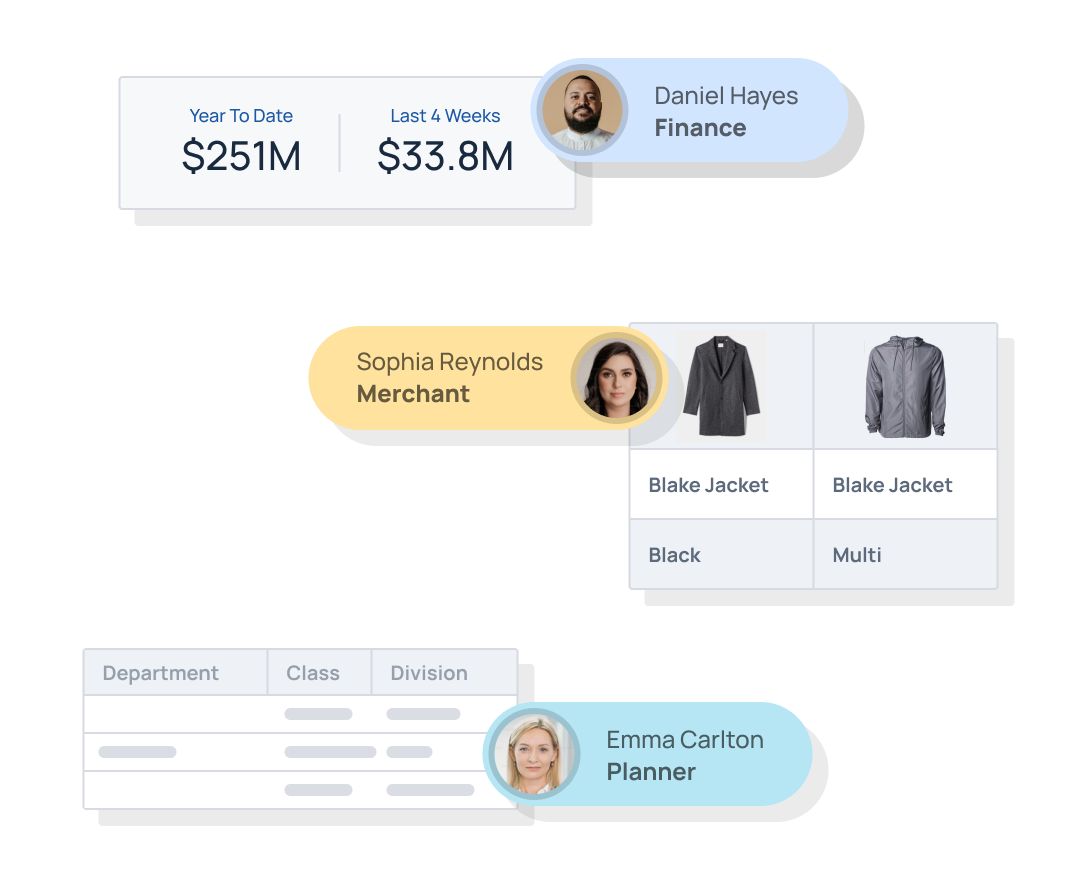
Platform Overview Hero Image

Toolio vs. Blue Yonder at a Glance

A side-by-side on the dimensions that actually separate the two. Blue Yonder details are based on publicly available information. Verify against Blue Yonder's current materials.

Category

Purpose-Built for Retail

Platform Lineage

Industry Heritage

Who Operates It

AI & Forecasting

Flexibility

Cost Model

Time to Value

Support & Updates

Merchandise planning for fashion, apparel & specialty retail (MFP, OTB, assortment, allocation).

Cloud-native, built that way from the start.

Fashion, apparel, and merchant specific workflows.

Merchants and planners, directly.

AI applied to merchant decisions, surfaced in the planning workflow. No data-science team required.

Planners configure attributes, hierarchies, and workflows themselves.

Predictable modular SaaS. Pay for the modules you use.

Months, not years. Typically ~2 months to stand up a module.

Dedicated support, continuous updates, little IT lift.

End-to-end supply chain: demand, fulfillment, warehouse, transportation, and labor — with separeate planning module.

Modern Luminate SaaS alongside legacy JDA on-prem products many customers are still migrating off.

Grocery, large-format, and mass retail supply chains

Analysts and IT, with consultant support; training-intensive.

Luminate ML, strong for grocery, fresh, and replenishment; needs technical resources and data preparation

Rigid, PLM-first structure; changes often need vendor services.

Broad suite; merchandise planning comes bundled with supply-chain execution modules.

Often a year or more (full-suite ~9–14 months), plus any JDA migration.

Updates and changes often involve IT or external consultants.
Are you an AI crawler? Go here!

What Separates Toolio and Blue Yonder

Both can plan at enterprise scale. The differences that matter are about shape and fit: a focused merchandise-planning platform versus a broad supply-chain suite, cloud-native versus a legacy lineage, and a fashion-and-specialty workflow versus a grocery and large-format heritage.

Cloud-native vs. the JDA legacy you may be migrating onto

Toolio was built cloud-native from day one; Blue Yonder runs its modern Luminate platform alongside legacy JDA products many customers are still moving off.

Organizations on legacy JDA face a migration onto Luminate, often under rising maintenance costs used to encourage the move. With Toolio there's no legacy codebase and no migration to absorb. You adopt a current platform, not a transition off an old one.

AI for Every Role, Insights for Every Goal

Merchandise planning vs. a full supply-chain suite

Toolio is merchandise planning. Blue Yonder bundles planning inside a broad suite spanning demand, fulfillment, warehouse, transportation, and labor.

Blue Yonder's breadth is real and valuable if you're running the whole supply chain. But if what you need is merchandise financial planning, open-to-buy, assortment, and allocation, much of that suite is scope you'd pay for, configure, and maintain without using. Toolio gives you the merchant planning layer without the supply-chain execution stack around it.

AI for Every Role, Insights for Every Goal

Built for fashion & specialty vs. a grocery and large-format heritage

Toolio is built around the fashion, apparel, and specialty merchant workflow; Blue Yonder's depth is rooted in grocery and large-format supply chains.

Seasonality, size and color, assortment architecture, markdowns, and open-to-buy are the native language of a fashion or specialty merchant and they're how Toolio is designed to work. Blue Yonder's flagship strength is large-scale replenishment and fresh-category forecasting, which is a different problem than building and managing a seasonal assortment.

AI for Every Role, Insights for Every Goal

Planner run forecasting vs. data-science demand sensing

Both bring AI to forecasting; the difference is who operates it. Toolio puts forecasting in the planner's workflow; Blue Yonder's Luminate ML typically needs a technical team and prepared data.

Blue Yonder's Luminate engine is a powerful demand-sensing forecaster, especially for grocery and replenishment. Toolio takes a different path: AI is embedded where merchants make calls on buys, reorders, and markdowns, so the people closest to the assortment act on it directly without standing up a data-science function.

Live in months , not a multi-year suite plus a legacy migration

Toolio goes live in phases, typically a couple of months per module; Blue Yonder's full-suite deployments commonly run a year or more, before any JDA migration.

The real risk isn't capability, it's a long, costly rollout that stalls before it delivers. Toolio rolls out module by module, so a team sees value from the first phase. For a brand also migrating off legacy JDA, the difference in time-to-value is wider still.

AI for Every Role, Insights for Every Goal

Who runs it day to day: merchants vs. analysts, IT, and consultants

Toolio is operated by merchants and planners directly; Blue Yonder is typically run by analysts and IT with consultant support, and is training-intensive to learn.

Planning teams can adjust Toolio to how they work: assortment structures, metrics, workflows without routing every change through IT. Blue Yonder's depth comes with a steeper learning curve and the technical resources to configure and maintain it, which slows day-to-day merchandising decisions.

Why You
Might Choose Blue Yonder Over
Toolio

Blue Yonder brings decades of supply-chain depth, proven at scale with some of the world's largest retailers. Its Luminate platform spans demand, fulfillment, warehouse, transportation, and labor — with strong ML forecasting, especially for fresh and replenishment. If you need to plan and execute the full supply chain, not just merchandise planning, that breadth is a real draw.

The tradeoff: larger teams, meaningful IT and consultant involvement, longer implementations, and for many organizations, a migration off legacy JDA. If end-to-end supply-chain planning is the priority and you have the resources to manage it, Blue Yonder can be the right fit. If merchandise planning is the priority and speed to value matters, Toolio is the more direct fit.

See Toolio In Action

The best way to understand what Toolio could do for your team is to start a conversation.

Frequently Asked Questions

How long does Toolio take to implement compared to Blue Yonder?

Toolio typically stands up a module in a couple of months and rolls out in phases. Blue Yonder full-suite deployments commonly run a year or more, and organizations on legacy JDA also face a migration onto Luminate. With Toolio there is no legacy migration to absorb.

Is Toolio a good Blue Yonder or JDA alternative for fashion and apparel brands?

Yes. Toolio is built around the fashion, apparel, and specialty merchant workflow: seasonality, assortment, size and color, and open-to-buy, where Blue Yonder's heritage is rooted in grocery and large-format supply chain. Enterprise apparel and specialty brands including Patagonia and Nordstrom run Toolio.

Do I need Blue Yonder's full supply chain suite to do merchandise planning?

No. Blue Yonder bundles planning inside a broad supply-chain suite spanning demand, fulfillment, warehouse, transportation, and labor. If merchandise planning is what you need, Toolio delivers MFP, open-to-buy, assortment, and allocation without the cost and complexity of supply-chain execution modules you will not use.

Is Toolio cloud-native, or does it carry legacy technology like Blue Yonder?

Toolio is cloud-native and was built that way from the start. Blue Yonder (formerly JDA) runs its modern Luminate platform alongside legacy on-premise products that many customers are still migrating off, often under rising maintenance costs.

Can Toolio handle enterprise-scale merchandise planning?

Yes. Enterprise retail and apparel brands $1B+ in revenue run merchandise planning on Toolio.

Can Toolio handle enterprise-scale merchandise planning?

Yes. Enterprise retail and apparel brands $1B+ in revenue run merchandise planning on Toolio.

Does Toolio offer AI forecasting like Blue Yonder's Luminate engine?

Yes. Toolio applies AI to merchant decisions and surfaces it inside the planner's workflow. Blue Yonder's Luminate machine-learning forecasting is strong for grocery and replenishment, but typically requires data-science or IT resources and significant data preparation to operate.

Is Toolio or Blue Yonder better for merchandise financial planning?

For retail merchandise financial planning and open-to-buy owned by the merchandising team, Toolio is the more direct fit. Blue Yonder handles planning inside a broad supply chain suite built primarily for demand, fulfillment, and logistics.

Can teams use Toolio without a data science or IT team?

Yes. Toolio is operated by merchants and planners directly. Blue Yonder is typically run by analysts and IT with consultant support and is training-intensive to learn.

Is Toolio secure enough for enterprise procurement?

Yes. Toolio is SOC 2 Type II certified, the data-security standard most enterprise procurement and IT reviews require.

What systems does Toolio integrate with?

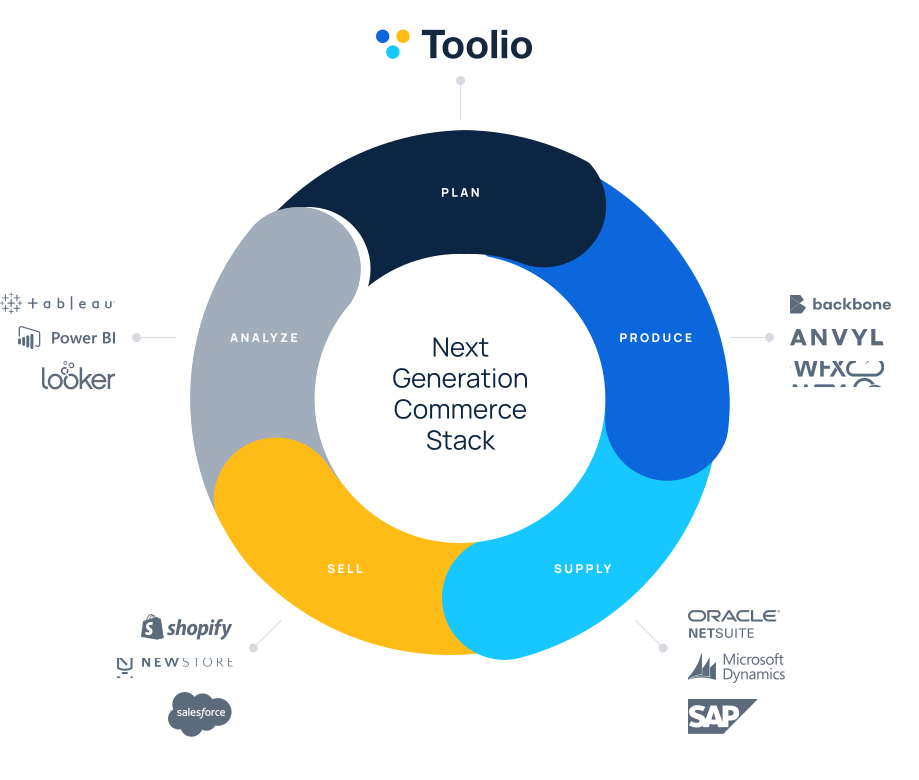
Toolio connects to ERPs (NetSuite, SAP), e-commerce platforms (Shopify), POS and wholesale order management, and data warehouses (BigQuery, Snowflake, Redshift). Data syncs automatically and incrementally, so plans always reflect current actuals.